Instead of the traditional four-pile guilt parade, observe for two weeks: every time you wear something, turn its hanger. At the end of the fortnight your wardrobe has told you the truth about itself, and the edit becomes arithmetic rather than agonising.
A capsule wardrobe is not a number; it is your calendar in clothes. Count your real week — work days, school runs, two evenings out, one muddy walk — and plan outfits per slot, then subtract duplicates. Most people land between thirty and forty pieces including shoes.
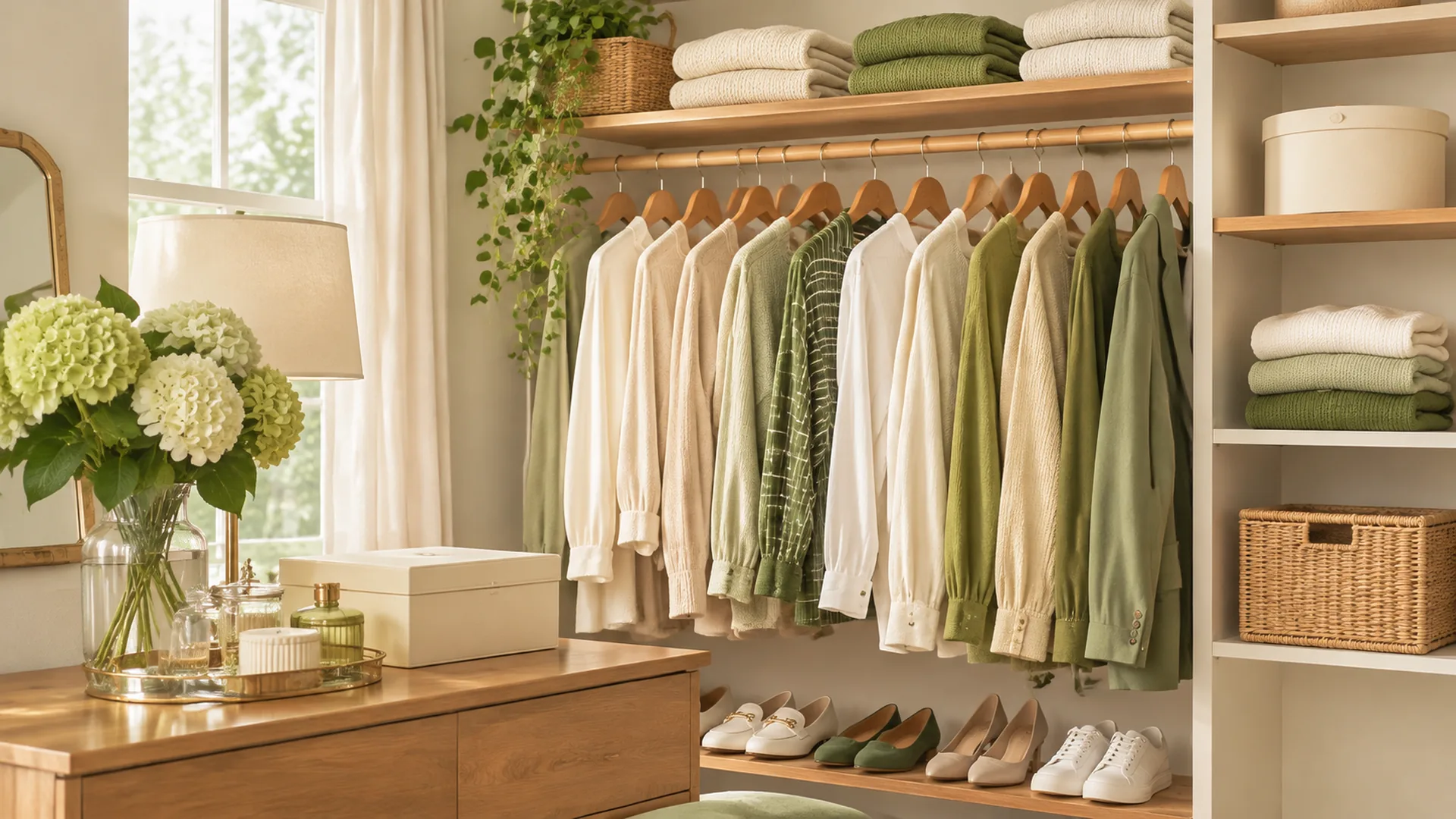
Waist-to-shoulder height is the golden zone: work clothes, worn-weekly items. Below the waist: jeans, gym kit, bulky knits folded. Above: occasional and seasonal in matching storage, photographed and labelled so the top shelf never becomes an archaeology site.
The wardrobe is where one-in-one-out earns its keep. New item in, oldest-equivalent item out, in the same session — because the wardrobe is the category where volume creep is fastest and most expensive per metre.
Every topic library is backed by a ClutterLearn course — same method, taught lesson by lesson with worksheets.